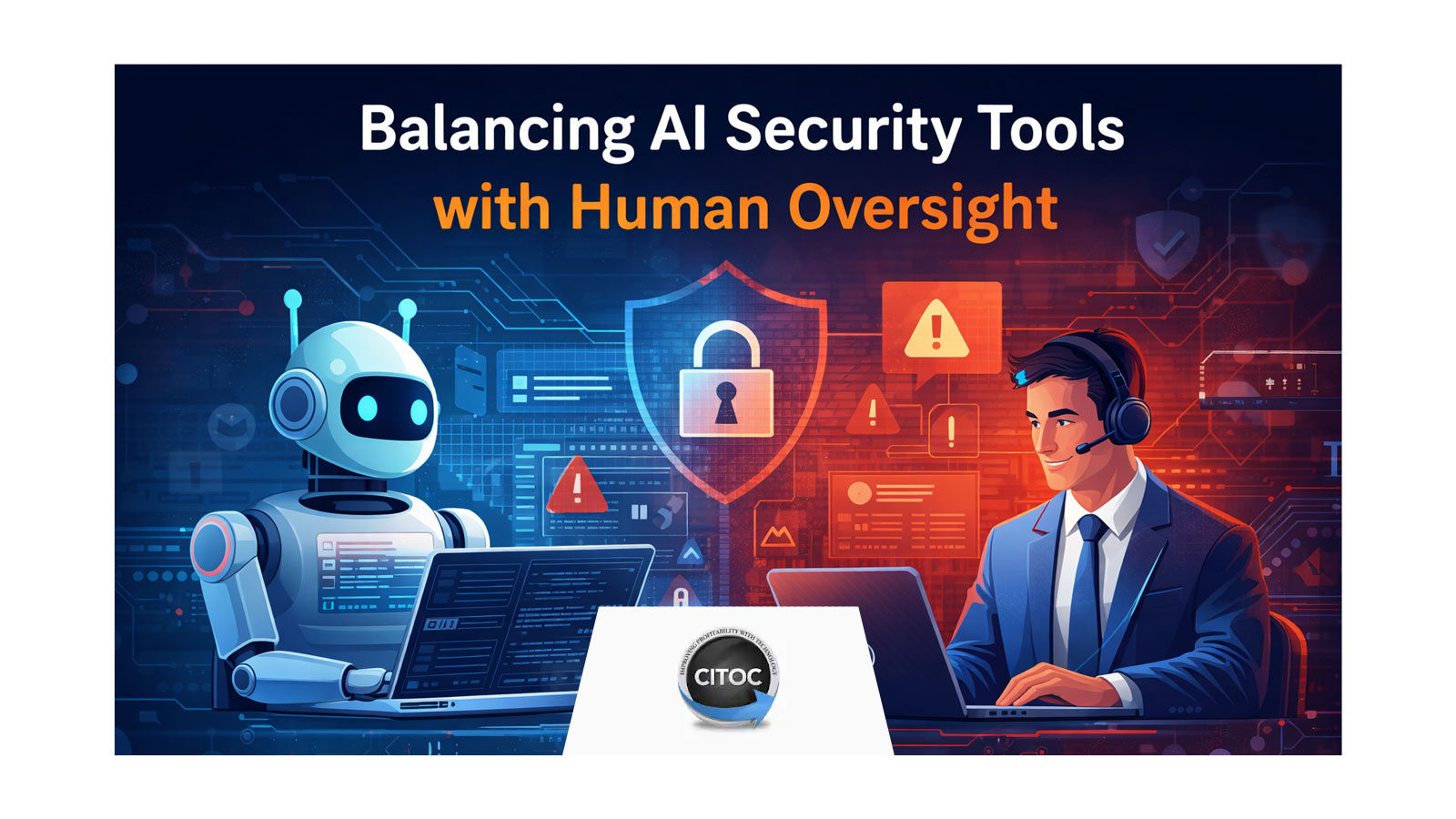
AI and machine learning threat detection are reshaping how businesses defend against cyber attacks. Phishing detection, unusual login alerts, and automated quarantines all happen faster and at greater scale with these tools than with human teams alone.
But automation isn’t infallible. Without proper oversight, AI can misfire, triggering false alarms, missing novel attacks, or even locking out key users mid-meeting.
For cybersecurity to truly protect your business, algorithms aren’t enough. Houston businesses also need human experts who can guide, interpret, and course-correct when the unexpected hits.
What AI in Cybersecurity Tools Do Well
AI-powered cybersecurity tools have transformed how organizations detect and respond to threats. Their ability to monitor massive volumes of data in real time makes them essential in today’s fast-moving threat landscape.
AI Cybersecurity Features: At A Glance
| Feature | What It Enables | Example in Action |
|---|---|---|
| 24/7 Threat Detection | Monitors systems and flags unusual activity instantly | AI spots a login attempt from a foreign IP at 2 a.m. |
| Behavioral Analysis | Detects anomalies based on baseline user behavior | Flags an employee who suddenly downloads 1,000 files |
| Scalability | Monitors large, distributed environments | AI secures dozens of branch offices from one dashboard |
| Automated Response | Executes actions like quarantining files or blocking users | AI disables a compromised account mid-attack |
| Phishing Protection | Detects and filters out deceptive emails | Flags an email spoofing a CEO with a fake invoice |
| Zero-Day Detection | Identifies never-before-seen threats | Catches a new malware strain before it’s cataloged |
Key strengths include:
- Rapid Threat Detection: AI systems continuously scan for anomalies, such as unusual login times, unexpected file transfers, or suspicious IP addresses, and raise alerts before damage is done.
- Behavioral Analysis: By learning what’s normal for each user or device, AI can detect subtle deviations that may indicate a compromised account or insider threat.
- Scalability: While human analysts have limits, AI can monitor thousands of endpoints and logs at once—ideal for growing businesses with hybrid environments and distributed teams.
- Automated Response: AI doesn’t just detect threats; it can respond instantly. From quarantining infected files to locking suspicious accounts, smart systems execute preconfigured actions in seconds.
These AI security tools for businesses are particularly effective in identifying ransomware behavior, flagging phishing emails through pattern recognition, and detecting zero-day exploits before patches are available.
Where AI Falls Short Without Human Oversight
As powerful as AI tools are, they’re not foolproof. Left unchecked, they can create more noise than clarity, and sometimes even cause business disruption. Key cybersecurity automation risks include:
- False Positives: AI systems are designed to be cautious. But that can backfire when overly sensitive rules trigger unnecessary alerts. The result? Alert fatigue. IT teams waste time chasing harmless activity while real threats go unnoticed.
- Lack of Context: AI doesn’t understand your business priorities. It can’t tell the difference between a legitimate software update and a potential breach, or weigh the consequences of locking out an executive during a board meeting.
- Adaptability Issues: Cybercriminals evolve constantly. By the time an AI system is trained on one attack vector, a new one may already be in use. Without regular updates and tuning, AI falls behind.
- Ethical & Compliance Risks: Automated tools that block users or restrict data access may unintentionally violate internal policies or privacy regulations, especially if no human is reviewing the action.
Consider a C-level executive who plugs in a new USB during a high-stakes client pitch. The AI system, mistaking the device for a potential threat, disables the laptop mid-presentation. The meeting is derailed, the client is confused, and the damage is done, all because the system lacked the nuance a human could’ve provided.
The Role of Human Oversight in Modern Cybersecurity
AI can scan millions of events in seconds, but it takes human judgment to turn that data into smart decisions. Behind every effective AI-driven cybersecurity system is a team of people who make it work.
Here’s what human-in-the-loop security oversight brings to the table:
- Pattern Interpretation & Response Prioritization
AI may flag unusual activity, but not every alert deserves the same urgency. Skilled professionals can distinguish between a threat and a false positive. For example, when a marketing manager’s laptop initiates a large midnight data transfer, AI might raise the alarm, but a human analyst can quickly verify it’s part of a scheduled campaign sync, avoiding unnecessary disruption. - Business Context Awareness
Only people can understand how a threat impacts operations, compliance, or customer trust. If AI blocks a CFO’s remote login attempt during a live investor call, a human analyst can recognize it as a legitimate VPN session and override the action, keeping the event online while still monitoring for real risk. - Escalation & Compliance Handling
Stopping a threat is just the beginning. A human-led response ensures that remediation follows internal protocols and regulatory requirements. For example, when ransomware targets shared files, AI may block access instantly, but it’s the human response team that initiates proper incident reporting and ensures HIPAA or FINRA compliance steps are taken. - Tuning AI to Stay Effective
Threats evolve, and so must your security tools. Cybersecurity teams regularly refine AI rules to reduce false positives and adapt to emerging tactics. After seeing repeated false alarms triggered by common collaboration tools, CITOC’s team adjusted detection parameters to focus on genuinely suspicious file transfer behavior, improving both accuracy and response time.
How to Build the Right Balance: Tools + People
When it comes to AI vs human IT security, it’s not about choosing one over the other. Businesses need a hybrid security posture that blends the speed and scale of automation with the judgment and adaptability of human oversight. Here’s how to get it right:
Don’t Rely on AI Alone
Cybersecurity isn’t just about buying the latest software. The real value lies in how well it’s implemented, monitored, and fine-tuned. Look for vendors who don’t just provide tools, but bring strategic guidance and hands-on support to the table.
- Use AI for pattern recognition, log monitoring, and rapid alerting.
- Assign human review for high-stakes actions like account lockouts or quarantines.
- Involve compliance or legal teams before automating sensitive decisions.
Choose Vendors That Blend Tools and Talent
Even the smartest tools fall short if your team doesn’t know how to use them. When employees understand what alerts mean and how to respond, they become an active part of your security posture, not a weak link.
- Partner with providers (like CITOC) that combine automation with real-time support.
- Confirm that their experts help interpret alerts and adjust settings regularly.
- Ensure vendor support includes both initial setup and ongoing incident response.
Invest in Staff Training
AI alerts are only useful if your team knows how to respond.
- Schedule quarterly training or simulated incident drills.
- Create and document a clear incident response playbook.
- Assign roles for alert review, escalation, and resolution.
Continuously Test and Tune
Threats are always evolving, and so should your AI. Security configurations that worked last year may now miss critical risks, or flood your team with irrelevant data. Routine testing and adjustment keep your tools sharp and your defenses relevant to current threats.
- Review detection thresholds every 30–60 days.
- Adjust patterns based on emerging attack types.
- Reduce false positives to prevent alert fatigue.
- Ensure compliance rules are up to date and properly enforced.
How CITOC Combines AI with Human Expertise
At CITOC, we understand that cybersecurity isn’t just about automation, but orchestration.
- 24/7 Monitoring with AI-Powered Tools
Our systems continuously monitor your network for anomalies, unusual behavior, and known threat signatures. - Human-Backed Threat Analysis and Response
Certified IT professionals interpret alerts, escalate real risks, and act swiftly to prevent breaches or business disruption. - Localized Intelligence for Houston Businesses
We proactively tune your cybersecurity systems based on emerging local threats, industry-specific risks, and your operational needs. - Strategic Support for Compliance and Continuity
From HIPAA to SOC 2, we help ensure your AI systems are configured to support your compliance requirements.
Don’t Let AI Run on Autopilot
AI is a powerful cybersecurity asset, but only when guided by experienced hands. Installing tools isn’t enough. Partnering with experts who understand how to interpret, adjust, and respond to threats makes all the difference. AI can strengthen your cybersecurity, but only with the right people behind it. Contact CITOC to discover how our expert-led, AI-enhanced security keeps your business protected and proactive.
